
Imagine a world where customer service runs 24/7, marketing campaigns write themselves, and businesses make split-second decisions based on real-time data. Welcome to 2025, where Artificial Intelligence (AI) isn’t just a buzzword—it’s the backbone of modern business transformation.
From startups to Fortune 500 companies, AI is revolutionizing the way businesses operate, compete, and grow. This blog dives deep into the real-world impacts of Artificial Intelligence in 2025, based on industry trends, expert opinions, and practical experiences.
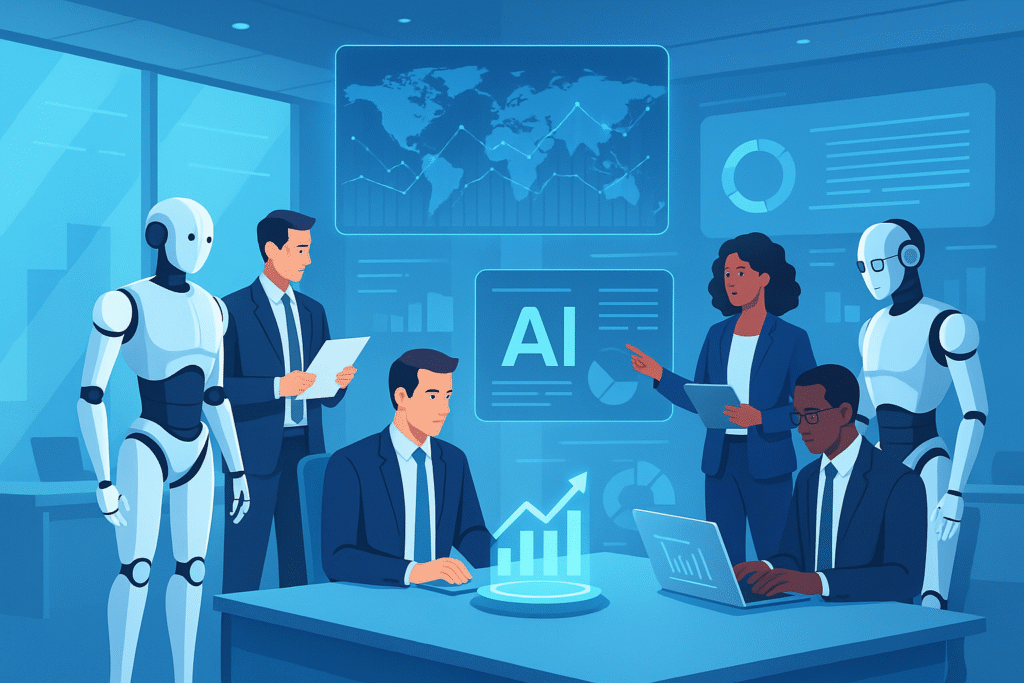
The AI Revolution: A 2025 Perspective
What’s Changed Since 2020?
In just five years, AI has evolved from an experimental tool to a strategic necessity. Here are key shifts:
- Automation at Scale: Routine tasks like data entry, scheduling, and reporting are now fully automated.
- Smarter Decision-Making: Predictive analytics and AI-driven dashboards help businesses forecast trends and mitigate risks.
- Hyper-Personalization: Marketing and customer engagement are tailored to individual preferences using AI algorithms.
According to a McKinsey report, companies leveraging AI have seen profit increases of up to 20%, thanks to operational efficiencies and enhanced customer experiences.
Key Areas Where AI Is Reshaping Businesses
1. Customer Service Gets a Digital Brain
Chatbots in 2020 were often frustrating. In 2025, AI-driven virtual assistants are context-aware, multilingual, and emotionally intelligent. Powered by Natural Language Processing (NLP), these bots:
- Resolve 80% of queries without human intervention
- Learn from customer interactions to improve responses
- Integrate seamlessly with CRM platforms
Companies like Zendesk and Freshdesk now offer AI-first customer support solutions, reducing response times and boosting customer satisfaction.
2. Marketing That Thinks for You
AI tools now craft marketing strategies with near-human creativity. Platforms like Jasper AI and HubSpot AI analyze customer behavior, generate ad copy, and even A/B test content in real time.
AI in Marketing Includes:
- Audience segmentation based on predictive behavior
- Real-time campaign optimization using machine learning
- Personalized email flows based on customer journeys
“In 2025, marketers aren’t replaced by AI—they are empowered by it.”
3. Smart Hiring and HR Automation
Recruitment is one of the most human-driven functions, yet AI has made significant inroads:
- AI scans resumes to match job descriptions
- Chatbots conduct initial interviews
- Bias detection algorithms ensure fairer hiring
Tools like HireVue and Pymetrics use AI to evaluate candidates on skills, not just credentials, transforming recruitment into a data-driven function.
4. AI in Finance and Risk Management
AI has become indispensable in financial services. It flags fraudulent transactions in real time, predicts credit risks, and even manages investment portfolios.
Key Tools:
- AI-powered robo-advisors (e.g., Betterment, Wealthfront)
- Fraud detection systems powered by anomaly detection algorithms
- Blockchain and AI integration for secure and smart contracts
5. Productivity & Workflow Automation
Tools like Zapier AI, Notion AI, and Microsoft Copilot now automate repetitive tasks like:
- Meeting summaries
- Document formatting
- Workflow tracking
These tools don’t just save time—they free up human creativity for higher-value tasks.
Real-World Examples of AI in Action
| Company | Industry | AI Application | Outcome |
|---|---|---|---|
| Amazon | E-commerce | AI for dynamic pricing & logistics | 30% increase in delivery efficiency |
| Netflix | Entertainment | AI for content recommendations | 80% of views come from AI suggestions |
| Tesla | Automotive | AI in autonomous driving & data analysis | Improved safety, smarter vehicles |
| Zara | Retail Fashion | AI for inventory & trend forecasting | Reduced overstock and missed trends |
Unique Insights: The Human Side of AI
My Personal Take as a Digital Professional
As someone running a digital agency, I’ve seen firsthand how AI tools like ChatGPT, Midjourney, and SurferSEO have transformed content creation, design, and SEO optimization. Instead of spending hours on drafting ideas, my team now uses AI for brainstorming and research, giving us more time to focus on strategy and creativity.
Balancing AI with Human Touch
However, not everything should be automated. Customers still crave empathy, trust, and human connection. The best-performing businesses in 2025 are those that know where to let AI handle the load and where to bring in the human touch.
“AI is a tool, not a replacement. The magic happens when humans and machines collaborate.”
What Businesses Must Do to Stay Ahead
1. Invest in AI Literacy
Train your workforce to work with AI, not fear it. Offer AI training, certifications, and hands-on experience.
2. Prioritize Data Ethics
With great data comes great responsibility. Ensure transparency in how AI uses customer data. Follow GDPR and local compliance laws.
3. Choose the Right Tools
Don’t chase every AI trend. Identify business goals, then choose AI solutions that align. Consider tools like:
- ChatGPT for customer interaction
- MonkeyLearn for sentiment analysis
- Looker Studio for AI-driven data visualization
4. Create an AI Adoption Roadmap
Roll out AI in phases:
- Start with low-risk tasks (e.g., scheduling)
- Measure performance
- Gradually scale to complex areas (e.g., forecasting)
Conclusion: The AI-Driven Future Is Now
Artificial Intelligence is not on the horizon—it’s here, embedded in every business process, reshaping how companies operate and deliver value.
Whether you’re a solo entrepreneur, a mid-sized firm, or an enterprise giant, the question is no longer “Should I use AI?” but “How can I use AI more strategically?