
Running a startup in 2025 means wearing a dozen hats — marketing, sales, finance, HR, and more. The only way to stay lean, agile, and efficient? Business automation.
Today’s automation tools don’t just save time — they empower startups to scale smarter, reduce human error, and focus on what truly matters: growth, innovation, and customer experience.
In this guide, we break down the top 7 business automation tools that every startup should consider in 2025 — covering everything from marketing to project management and customer support.
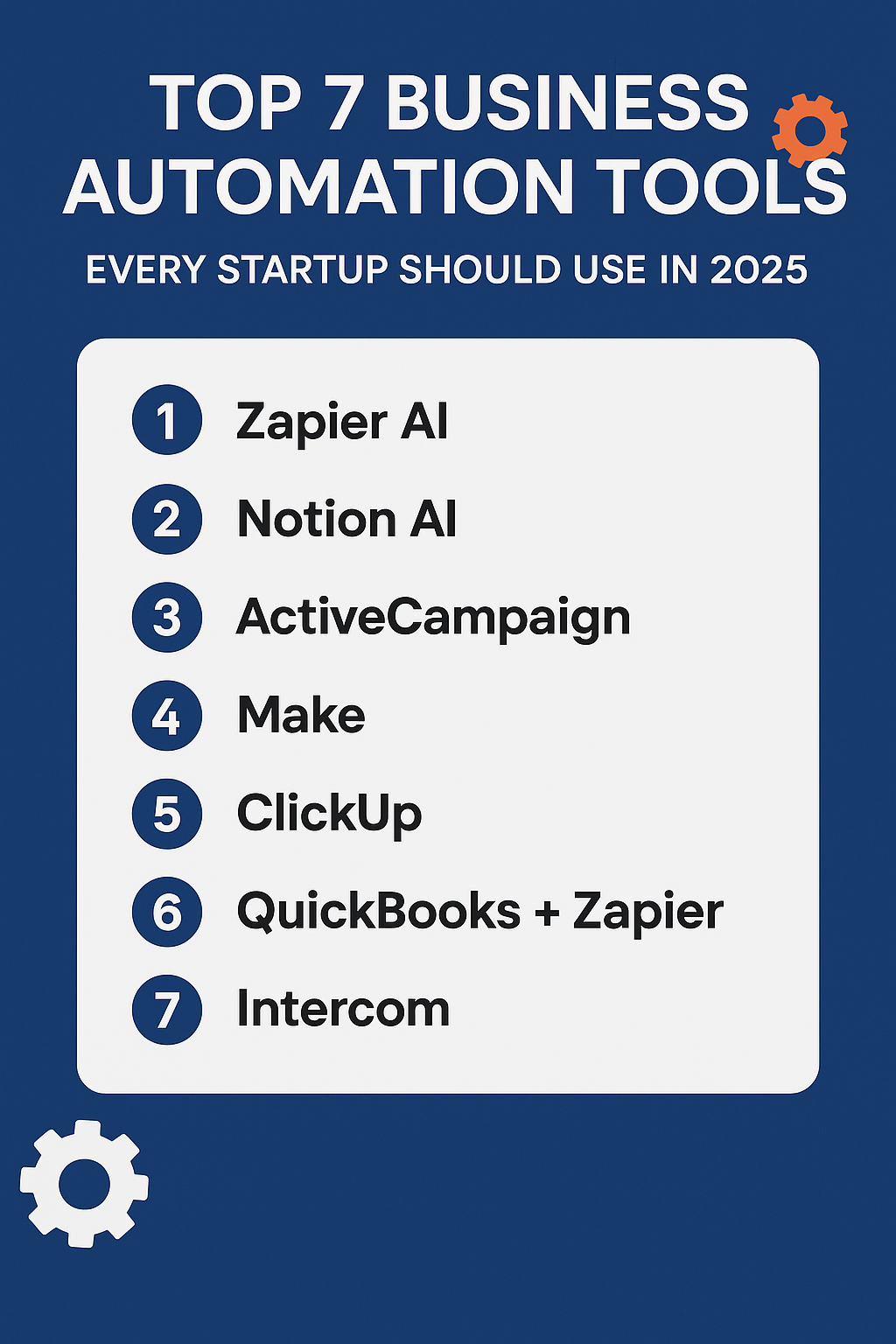
1. Zapier – The Ultimate Integration Powerhouse
Category: Workflow Automation
Website: zapier.com
What It Does:
Zapier connects over 6,000+ apps like Gmail, Slack, Google Sheets, and Notion to automate tasks without coding. Create “Zaps” that automate repetitive actions like:
- Sending Slack alerts from form submissions
- Creating Trello cards from email threads
- Updating CRM data from Google Sheets
Why Startups Love It:
- Saves hours of manual work
- Requires zero developer resources
- Scales easily as teams grow
2. Notion AI – For Smarter Team Collaboration
Category: Knowledge Management + AI Productivity
Website: notion.so
What It Does:
Notion AI turns your Notion workspace into an AI-powered productivity hub. From writing blog drafts to summarizing meeting notes, it automates thinking tasks.
Why Startups Love It:
- Write faster with AI assistance
- Automate task tracking, wikis, and docs
- Centralize workflows for remote teams
It’s like having an intern and assistant built into your documents.
3. HubSpot – All-in-One Sales & Marketing Automation
Category: CRM, Marketing & Sales Automation
Website: hubspot.com
What It Does:
HubSpot is a go-to tool for startups managing lead generation, email marketing, sales funnels, and customer relationships.
Why Startups Love It:
- Automates lead capture and nurturing
- Offers free CRM for small teams
- Scales seamlessly with paid upgrades
Bonus: Includes live chat bots, ticketing, and powerful analytics all under one roof.
4. ClickUp – Automate Your Projects & Sprints
Category: Project Management & Productivity
Website: clickup.com
What It Does:
ClickUp is more than a task manager — it’s a complete work OS for assigning tasks, setting automations, and collaborating in real-time.
Why Startups Love It:
- Built-in automation for assigning tasks, status changes, and notifications
- Custom workflows, Kanban boards, and sprint planning
- Great for engineering, marketing, and ops teams alike
5. QuickBooks Online – Financial Automation Made Easy
Category: Accounting & Finance
Website: quickbooks.intuit.com
What It Does:
QuickBooks automates the boring but critical parts of running a business: invoicing, expense tracking, payroll, and tax prep.
Why Startups Love It:
- Auto-imports bank transactions
- Sends recurring invoices
- Prepares tax reports with a click
Integrates seamlessly with tools like Stripe, PayPal, and Shopify.
6. Tidio – Smart Customer Support Automation
Category: Chatbot + Customer Support Automation
Website: tidio.com
What It Does:
Tidio brings together live chat, AI bots, and helpdesk features to automate customer support — even when your team is offline.
Why Startups Love It:
- Automate 70%+ of basic support queries
- Offer instant responses 24/7
- Integrate with Messenger, Instagram, and email
Perfect for eCommerce, SaaS, and service-based startups.
7. Make (formerly Integromat) – Visual Workflow Automation
Category: Advanced Workflow Automation
Website: make.com
🔧 What It Does:
Make is like Zapier but more advanced — offering drag-and-drop workflows that can handle complex, multi-step automations.
Why Startups Love It:
- Great for automating advanced logic and APIs
- Visual workflow editor for clarity
- Powerful for developers and growth hackers
Ideal if your startup needs custom workflows beyond basic integrations.
Bonus: How to Choose the Right Automation Tools for Your Startup
Here’s a simple checklist to guide your decisions:
| ✅ Criteria | 💡 What to Consider |
|---|---|
| Core Business Need | Does the tool directly support a key function? |
| Ease of Integration | Does it play well with your current stack? |
| Pricing Flexibility | Is it scalable for growing teams? |
| Learning Curve | Can non-tech teams use it quickly? |
| Support & Community | Is help available when you need it? |
Visual Summary: Tools at a Glance
| Tool | Use Case | Best For |
|---|---|---|
| Zapier | App integrations | Cross-platform workflows |
| Notion AI | Docs & task automation | Internal teams |
| HubSpot | CRM & marketing | Lead generation |
| ClickUp | Project management | Tech, ops, marketing |
| QuickBooks | Finance automation | Accounting |
| Tidio | Customer support | eCommerce, SaaS |
| Make | Advanced workflows | Tech-savvy teams |
Conclusion: Automate to Elevate
Startups live or die by how efficiently they move. And in 2025, that means automating everything that doesn’t require your creative or strategic attention.
With the right business automation tools, you can:
- Reduce your workload
- Scale operations seamlessly
- Impress customers with lightning-fast service
- Make data-driven decisions
Whether you’re a solo founder or leading a 20-person team, start by automating one core area — and scale from there.
Your Next Step: Ready to Automate Smarter?
💬 Which tool are you most excited to try in 2025? Drop a comment below!
🧰 Or check out our Startup Toolkit Library for more tools, templates, and playbooks.
📩 Subscribe to our newsletter for weekly growth automation hacks!